
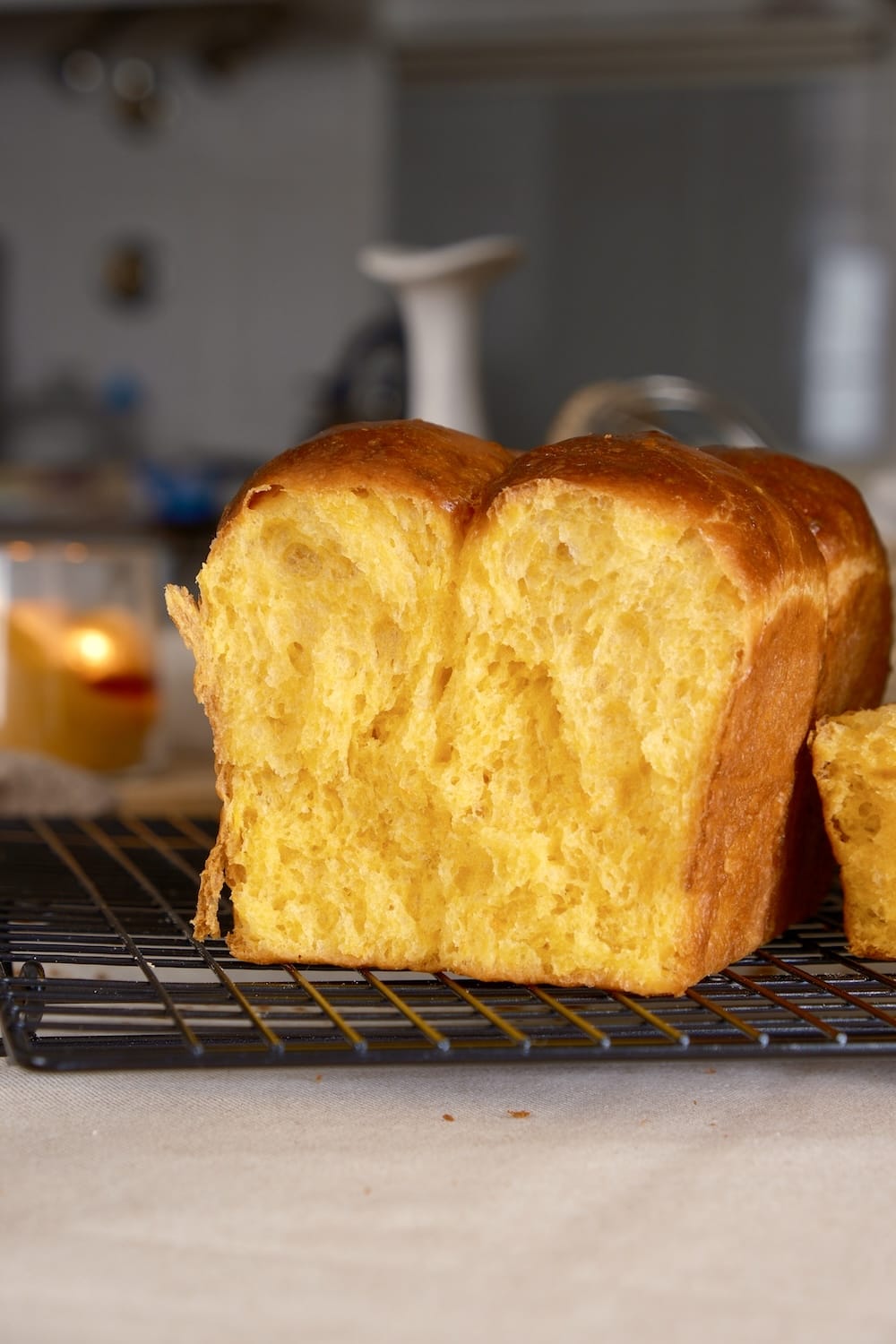
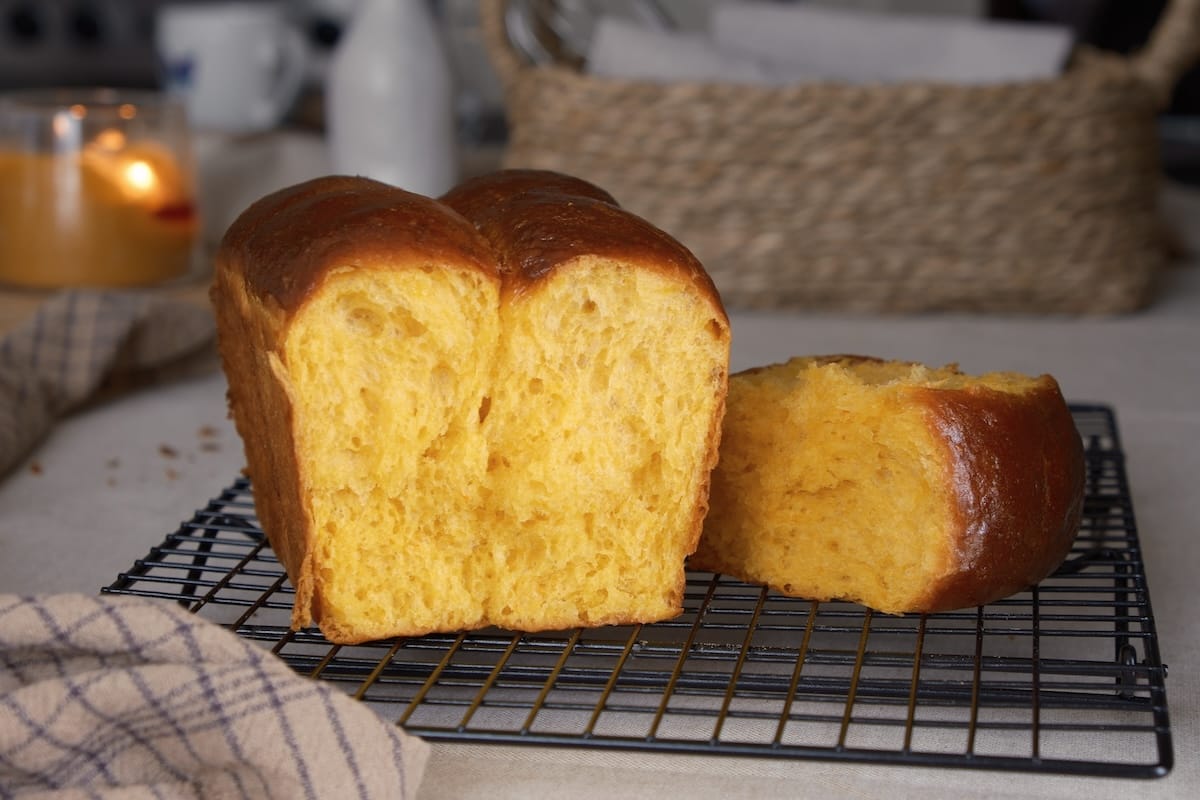
This pumpkin brioche is soft, buttery, and lightly sweet, with a beautiful golden color and a tender, shreddable crumb. It is made with roasted pumpkin purée, eggs, egg yolks, and plenty of butter, giving the bread the rich texture you expect from a classic brioche.
Roasted pumpkin adds natural sweetness, a warm autumn flavor, and a beautiful color without making the dough overly wet. The key is to use a thick pumpkin purée so the dough stays elastic and easy to shape.
You can make this pumpkin brioche in a stand mixer or by hand. I also recommend an overnight cold fermentation: it develops the flavor and makes the dough much easier to handle the next day. Shape it into one loaf or individual rolls and serve it with butter and honey, use it for French toast, or make breakfast sandwiches.
Why You’ll Love This Pumpkin Brioche
- Soft and buttery crumb thanks to eggs, egg yolks, butter, and roasted pumpkin purée.
- Naturally golden and aromatic from roasted pumpkin.
- Overnight fermentation develops flavor and makes the dough easier to shape.
- Versatile serving options — enjoy it with butter and honey, use it for French toast, or make savory breakfast sandwiches.
About the Ingredients
Strong bread flour: Provides enough gluten structure to support the rich dough and gives the brioche its soft, elastic crumb.
Eggs and egg yolks: Enrich the dough, add color, and contribute to the tender, delicate texture. The extra yolks make the crumb especially rich.
Roasted pumpkin purée: Adds natural sweetness, pumpkin flavor, moisture, and a beautiful golden color. Use thick pumpkin purée rather than watery purée.
Butter (82.5% fat): Gives the pumpkin brioche its rich flavor and soft, silky crumb. Add it gradually after the gluten has developed.
Sugar: Adds mild sweetness and helps the crust brown beautifully without making the bread taste like cake.
Salt: Balances the sweetness and enhances the flavor of the pumpkin and butter.
Instant yeast: Gives the enriched dough enough lift while allowing it to develop flavor during fermentation.
A note about the pumpkin purée
The amount of moisture in pumpkin purée can vary considerably, so its consistency matters more than the exact type of pumpkin you use. Roasting the pumpkin rather than boiling it helps concentrate the flavor and remove excess water.
If your purée is still watery, cook it briefly in a dry pan over medium heat, stirring constantly, until it becomes thick enough to hold its shape on a spoon.
Pro tip: Keep the ingredients cool, including the flour. Brioche dough can warm up quickly during mixing, especially after the butter is added. A cooler dough is easier to handle and helps maintain a good structure.
How to Make Pumpkin Purée
The best pumpkin purée for brioche is thick and relatively dry. Roasting the pumpkin helps remove excess moisture and gives the purée a deeper flavor.
- Peel the pumpkin and cut it in half lengthwise.
- Remove the seeds. An ice cream scoop works especially well for this.
- Cut the pumpkin into smaller pieces and arrange them on a lightly greased baking sheet or baking dish.
- Roast until the pumpkin is completely soft and easy to mash.
- Mash the roasted pumpkin with a potato masher, or blend it until smooth.
The exact roasting time depends on the type and size of the pumpkin pieces. The pumpkin is ready when it can be easily pierced and mashed.
How to Store Pumpkin Purée
Store pumpkin purée in an airtight container in the refrigerator for several days.
For longer storage, freeze it for up to 2 months. I like freezing the purée in an ice cube tray and then transferring the frozen portions to a freezer bag. This makes it easy to take out and weigh exactly the amount needed for a recipe.
Important: If the purée is watery, cook it briefly in a dry pan over medium heat, stirring constantly, until some of the moisture evaporates. Let it cool before adding it to the brioche dough.
How to Make Pumpkin Brioche
1. Mix the dough
Add the flour, whole egg, egg yolks, and pumpkin purée to the bowl of a stand mixer fitted with a dough hook. Mix on low speed for 2–3 minutes, just until all the flour is hydrated.
Add the salt, sugar, and instant yeast. Continue mixing on medium speed for 4–6 minutes, until the dough becomes elastic and starts to pull away from the sides of the bowl.
Keep an eye on the dough temperature. Aim for around 24°C (75°F).
2. Add the butter
Add the cold, pliable butter in small portions, about 20–25 g at a time. Wait until each portion is fully incorporated before adding the next.
Once all the butter has been added, continue mixing for 6–10 minutes, until the dough is smooth, elastic, and stretchy.
The dough should pull away from the sides of the bowl and pass the windowpane test: when you gently stretch a small piece, it should form a thin, translucent membrane without tearing immediately.
Making the dough by hand
You can also make this pumpkin brioche without a stand mixer.
Mix the flour, egg, egg yolks, and pumpkin purée until the flour is fully hydrated. Cover and rest for 30 minutes.
Add the salt, sugar, and yeast and mix until evenly incorporated. Cover and rest for another 30 minutes.
With wet hands, stretch one side of the dough and fold it over the center. Repeat on all sides, then cover and rest for another 30 minutes.
Repeat the folding once more. Finally, gradually work in the butter, adding it in small pieces and fully incorporating each piece before adding the next.
3. First Rise
Shape the dough into a ball and place it in a lightly oiled bowl. Cover and leave it at room temperature for 40–60 minutes, until it becomes slightly puffed.
For the best flavor and easier shaping, continue with an overnight cold fermentation.
4. Cold Fermentation
Cover the dough and refrigerate it for 8–24 hours at about 5°C (41°F).
This step is optional, but I highly recommend it. The slow fermentation develops more flavor and makes the cold dough much easier to shape the next day.
You can also bake the brioche on the same day if you prefer to skip the overnight fermentation.
5. Shape the Pumpkin Brioche
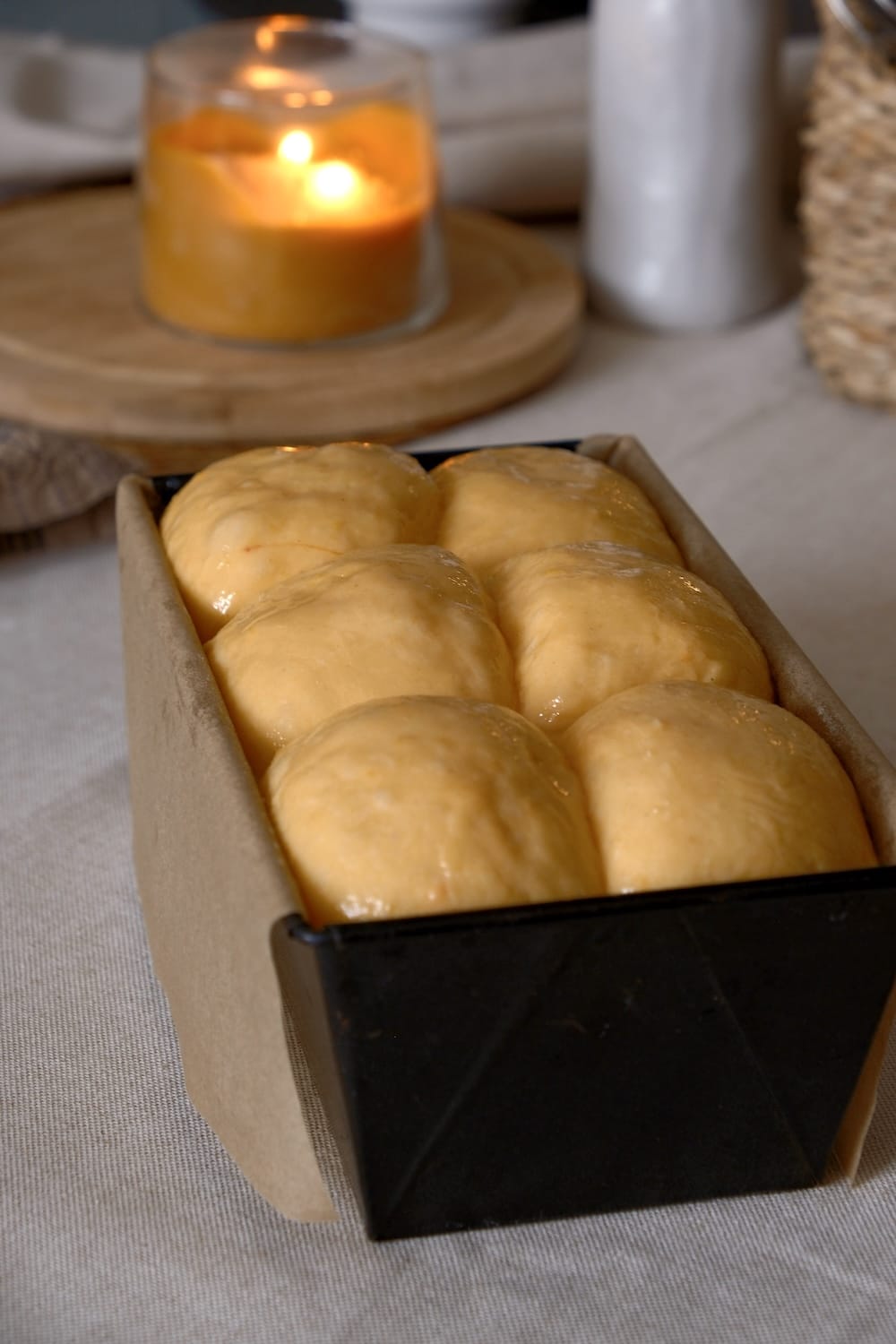
For one loaf, gently flatten the chilled dough into a rectangle and divide it into 6 equal pieces of about 90 g each.
Place the pieces into a greased loaf pan approximately 20 × 11 × 10 cm (8 × 4.3 × 4 in).
Cover and let the dough proof at 26–28°C (79–82°F) for 1½–2½ hours.
The exact time will depend on the temperature and yeast activity. The dough should become noticeably airy and increase in volume by about 2–3 times.
Don’t rely on the clock alone — the dough is ready when it looks light, puffy, and well-risen.
6. Egg Wash and Baking
Before baking, prepare the egg wash by whisking together 1 egg, 1 tablespoon of milk, and a pinch of salt.
Gently brush the risen dough with the egg wash. You can also sprinkle the top with pumpkin seeds if you like.
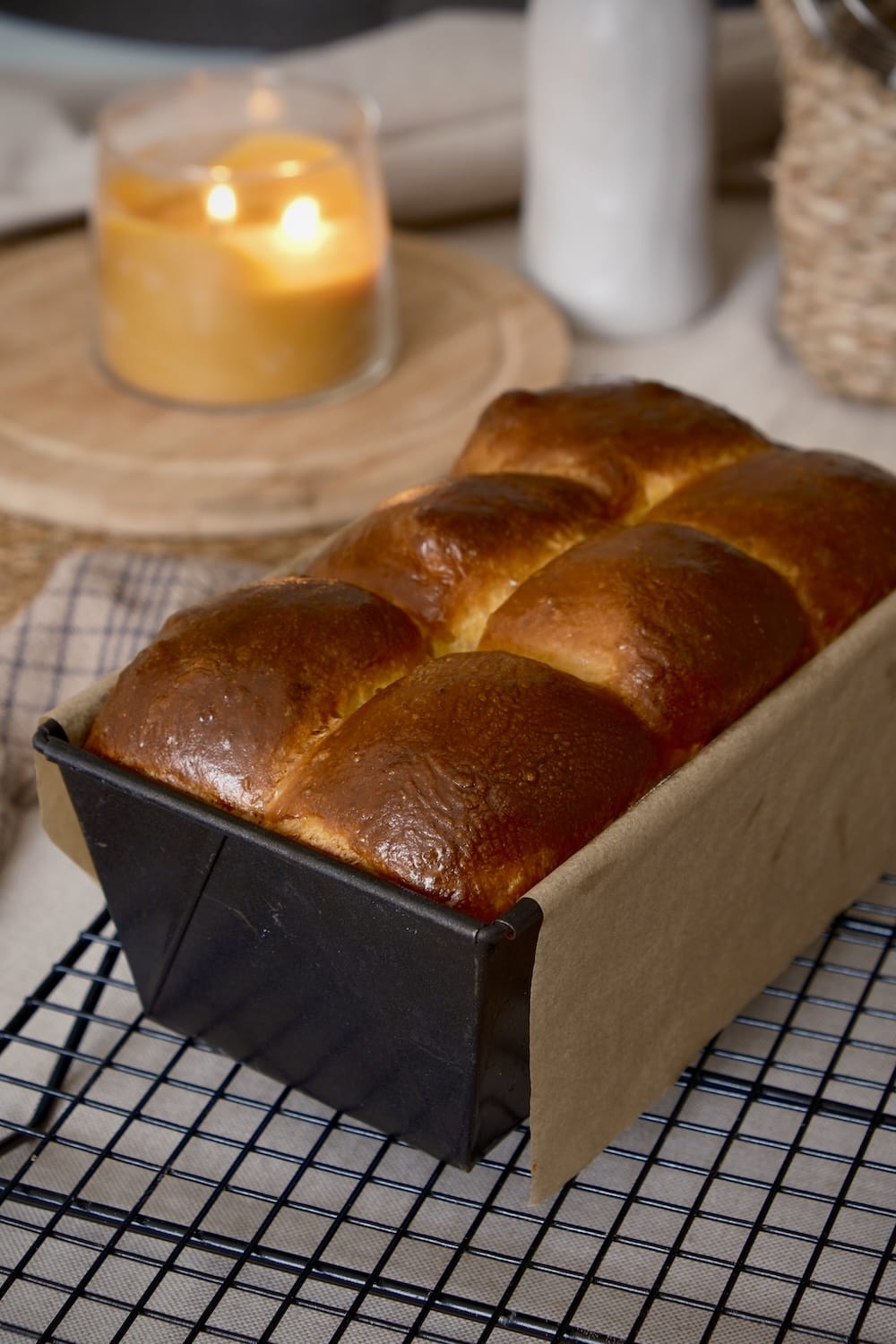
Bake in a preheated oven at 170–180°C (340–350°F) for about 30 minutes.
If the top starts browning too quickly, loosely cover the loaf with foil for the remaining baking time.
The pumpkin brioche is ready when the loaf is deeply golden and baked through. Transfer it to a wire rack and let it cool completely for at least 1 hour before slicing. This allows the crumb to set properly and keeps it soft and tender.
Troubleshooting & Pro Tips
The dough feels stiff: Your pumpkin purée may be too dry. Knead in 1–2 teaspoons of milk or a little more pumpkin purée at the end of mixing, adding only as much as needed.
The dough is too sticky or soft: The pumpkin purée may contain too much moisture. Next time, use a drier purée. If necessary, add 1–2 teaspoons of flour at the end of mixing.
The brioche browns too quickly: Lower the oven temperature by 5–10°C (10–20°F) or loosely cover the loaf with foil toward the end of baking.
The dough tears while shaping: It may need more gluten development or may be too cold. Let it rest briefly at room temperature before shaping. If necessary, knead it briefly to restore some elasticity.
Serving and Storage
How to Serve Pumpkin Brioche
This pumpkin brioche is delicious sliced and lightly toasted with butter and honey. It also works beautifully for French toast or breakfast sandwiches with cheese and ham.
How to Store Pumpkin Brioche
Store the cooled brioche in an airtight container or tightly wrapped at room temperature for 2–3 days.
You can also freeze the whole loaf or individual slices for up to 2 months. Thaw at room temperature and, if desired, warm briefly in the oven before serving.
Frequently Asked Questions
Can I use canned pumpkin for pumpkin brioche?
Yes. Canned pumpkin works well as long as it is thick and not watery. If necessary, cook it briefly in a dry pan to evaporate excess moisture before adding it to the dough.
Do I have to chill the pumpkin brioche dough overnight?
No, overnight refrigeration is optional. However, I recommend cold fermentation for 8–24 hours because it develops the flavor and makes the dough easier to handle and shape.
Can I use fresh yeast instead of instant yeast?
Yes. You can use 10 g of fresh yeast instead of approximately 4 g of instant yeast.
Why is the butter added after the dough develops gluten?
Butter is added after the initial gluten development because the high amount of fat can slow gluten formation. Adding it gradually once the dough has developed some strength helps create a smooth, elastic dough and a soft, fine crumb.
Why does my pumpkin brioche dough feel too sticky?
The most common reason is excess moisture in the pumpkin purée. Pumpkin varieties contain different amounts of water, so make sure your purée is thick and relatively dry before adding it to the dough.
If you try this recipe, share your impressions or fun tweaks in the comments below. Your feedback helps me create even more delicious recipes!
Pumpkin Brioche | Yellowmixer.com Baking Blog
Print RecipeIngredients
- 2 cups + 1 tbsp strong bread flour (245 g)
- 1 ¼ tsp instant yeast (4 g)
- 1 tsp fine salt (6 g)
- 2 ¾ tbsp sugar (35 g)
- ⅓ cup roasted pumpkin purée (75 g)
- 1 large egg (50 g)
- 3 egg yolks (60 g)
- 7 tbsp unsalted butter, 82.5% fat (100 g)
Instructions
Combine: Add flour, whole egg, egg yolks, and pumpkin purée to the bowl of a stand mixer fitted with a dough hook. Mix on low speed for 2–3 minutes, until all the flour is moistened.
Develop the dough: Add salt, sugar, and instant yeast. Mix on medium speed for 4–6 minutes, until the dough becomes elastic and starts to pull away from the sides of the bowl. Aim for a dough temperature of about 24°C (75°F). If the dough becomes too warm, pause briefly or cool the bowl.
Add butter: Add the butter in 4–5 portions of 20–25 g, allowing each portion to become fully incorporated before adding the next. Continue mixing for 6–10 minutes, until the dough is smooth, stretchy, and passes the windowpane test.
First rise: Shape the dough into a ball and place it in a lightly oiled bowl. Cover and let rise at room temperature for 40–60 minutes, until slightly puffy.
Cold fermentation: Cover and refrigerate for 8–24 hours at about 5°C (41°F). This step is recommended for better flavor and easier shaping.
Shape: Place the chilled dough on a lightly floured surface and gently flatten it into a rectangle. Divide into 6 pieces of about 90 g each. Shape each piece into a ball and place them in a greased 20 × 11 × 10 cm (8 × 4.3 × 4 in) loaf pan.
Proof: Cover and let rise at 26–28°C (79–82°F) for 1½–2½ hours, until the dough has increased in volume by about 2–3 times.
Egg wash and bake: Whisk together 1 egg, 1 tablespoon milk, and a pinch of salt. Brush the risen dough with the egg wash. Bake at 170–180°C (340–350°F) for about 30 minutes. If the top browns too quickly, cover loosely with foil toward the end of baking.
Cool: Transfer the brioche to a wire rack and let it cool completely for at least 1 hour before slicing.
By hand: Mix the flour, whole egg, egg yolks, and pumpkin purée until all the flour is moistened. Cover and rest for 30 minutes.
Additives: Add the salt, sugar, and yeast and mix until evenly incorporated. Cover and rest for another 30 minutes.
Strengthen: With damp hands, stretch one edge of the dough and fold it toward the center. Repeat on all sides. Cover and rest for 30 minutes.
Repeat: Repeat the stretch-and-fold once more.
Add butter: Gradually add the butter in small pieces, fully incorporating each piece before adding the next.
First rise: Shape the dough into a ball, place it in a lightly oiled bowl, cover, and let rise for 40–60 minutes at room temperature.
Cold fermentation: Cover and refrigerate for 8–24 hours at about 5°C (41°F).
Continue: Proceed with the shaping, proofing, baking, and cooling steps above.


Be the first to comment