
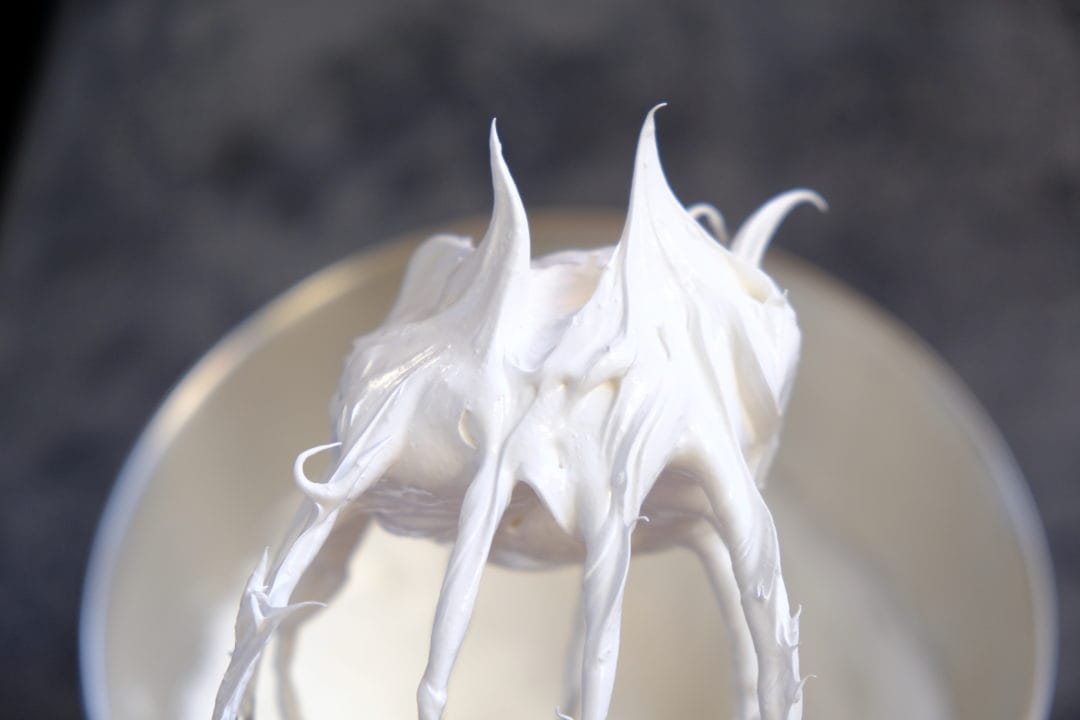
Meringue is a light, airy mixture made by whipping egg whites with sugar. It can be used as a base for many desserts, from crisp meringue cookies and Pavlova to meringue roulades and cakes.
There are three classic ways to make meringue — French, Swiss, and Italian. They use the same basic ingredients but differ in how the egg whites and sugar are combined. These differences affect the texture, stability, and best uses of each type.
In this guide, I’ll show you how to make all three types of meringue, explain how they differ, and share the key tips for getting a stable, glossy meringue every time.
What Is Meringue?
Meringue is a mixture of whipped egg whites and sugar. As the egg whites are whipped, they form a stable foam that traps air, while the sugar adds sweetness and helps create the characteristic smooth, glossy texture.
The three main types of meringue are French meringue, Swiss meringue, and Italian meringue. The main difference between them is how the sugar is added and whether it is heated before or during the whipping process.
Meringue can be used in many different desserts. When it is piped and slowly dried in the oven, it becomes crisp meringue cookies. If you want to learn how to make them, see my Meringue Cookies Recipe.
The same basic meringue technique is also used for meringue roulade, Pavlova, and other desserts.

The 3 Types of Meringue
As said earlier, there are three classic types of meringue: French, Swiss, and Italian. They all start with the same basic ingredients — egg whites and sugar — but the preparation method is different.
French meringue: egg whites are whipped while gradually adding sugar.
Swiss meringue: egg whites and sugar are first heated in a double boiler, then whipped.
Italian meringue: whipped egg whites are combined with hot sugar syrup.
All three methods produce different results.
French vs. Swiss vs. Italian Meringue
| Type | How the sugar is added | Stability | Common uses |
|---|---|---|---|
| French | Added gradually to whipped egg whites | Less stable | Meringue cookies, Pavlova, roulade |
| Swiss | Heated together with egg whites | More stable | Desserts, toppings, creams |
| Italian | Hot sugar syrup is added to whipped egg whites | Most stable | Frostings, mousses, creams |
The method you choose depends on the dessert you are making and how stable you need the meringue to be.
How to Make French Meringue
French meringue is the classic method and the best place to start if you are learning how to make meringue. It is the simplest and most delicate of the three types, requiring just egg whites, sugar, and a little attention to technique.
The basic principle is simple: whip the egg whites until foamy, add a pinch of salt, then gradually incorporate the sugar while increasing the mixer speed. The sugar should completely dissolve, leaving you with smooth, glossy peaks that hold their shape.
Lemon juice helps stabilize the meringue, gives it a bright white, glossy appearance, and slightly balances the sweetness.
One important thing to keep in mind is the sugar. Granulated sugar can be difficult to dissolve in meringue at room temperature. For the best results, use very fine sugar or powdered sugar.
Ingredients
- 100 g egg whites (from about 3 large eggs)
- a pinch of salt
- 200 g sugar
- 1 tbsp lemon juice
How to make French meringue
- Start whipping the egg whites with a pinch of salt on low speed. When they become very foamy, increase the mixer speed to medium.
- Once the egg whites become thicker and reach soft peaks, gradually add the sugar in small portions.
- Increase the mixer speed to high and continue whipping until you have firm, stiff peaks.
- Add the lemon juice and whip for a few seconds to incorporate it into the meringue. You can also add food coloring at this stage, if desired.
The finished French meringue should be thick, smooth, glossy, and stable enough to hold its shape.
French meringue is particularly well suited for desserts that are baked or dried after the meringue is prepared. It is commonly used for meringue cookies, Pavlova, meringue roulade, and meringue-based cakes.
Because it is the simplest method, it is also a good choice when you want to practice the basic technique of whipping egg whites with sugar.

How to Make Swiss Meringue
Swiss meringue is my favorite method because it produces a very stable, glossy, and thick meringue. It is also an excellent choice for cakes and pastries when you need a meringue that will hold its shape and keep decorations from losing their form.
The main difference is that the egg whites and sugar are heated together over a water bath before whipping. This may sound complicated, but it is actually quite simple — you just need to make sure the sugar dissolves completely before you start whipping.
Ingredients
- 100 g egg whites (from about 3 large eggs)
- a pinch of salt
- 200 g sugar
- 1 tbsp lemon juice
How to make Swiss meringue
- Combine the egg whites, salt, and sugar in a metal or glass bowl. Do not use a plastic bowl.
- Make a water bath: pour about 2 cm of water into a small saucepan and bring it to a boil. Reduce the heat so the water is gently simmering. Place the bowl with the egg whites and sugar over the saucepan, making sure the bottom of the bowl does not touch the water.
- Stir the mixture constantly with a whisk until the sugar has completely dissolved. Ideally, the temperature of the egg whites should reach 55–60°C (131–140°F). If you don’t have a thermometer, you can check by rubbing a little of the mixture between your fingers — there should be no sugar crystals.
- Remove the bowl from the water bath and start whipping the mixture, gradually increasing the mixer speed to high. Whip until you have firm, stiff peaks. This can take 10–15 minutes.
- Add the lemon juice and whip on low speed for a few more seconds, just until it is incorporated.
Swiss meringue is thick, smooth, glossy, and very stable, which makes it especially useful for cake and pastry decoration, where you need the meringue to hold its shape. It can also be used for creams and other desserts.

How to Make Italian Meringue
Italian meringue is made by whipping egg whites with hot sugar syrup, which makes it particularly thick and stable. It is a great choice when you need a meringue that can withstand different temperatures and hold its shape in more elaborate desserts.
Italian meringue can be used for cake and pastry decoration, creams, mousses, ice cream, and macarons. It is also a good option when you need a very stable meringue that will not easily lose its shape.
A stand mixer is especially convenient for this method because the egg whites can be whipping while you prepare the sugar syrup.
Ingredients
- 100 g egg whites
- 200 g sugar
- 50 ml water
- a pinch of salt
- 1 tbsp lemon juice (optional, for extra stability)
How to make Italian meringue
- Add a pinch of salt to the egg whites and start whipping them at medium speed until they reach soft peaks.
- Meanwhile, prepare the sugar syrup. Pour the water into a small saucepan, add the sugar, and place over medium heat. Cook the syrup, stirring constantly, until it reaches 118–120°C (244–248°F). This is the soft-ball stage.
- If you don’t have a cooking thermometer, you can check the syrup by dropping a little into cold water. If you can gather it into a soft ball with your fingers, the syrup is ready.
- When the egg whites have reached soft peaks and the syrup is ready, slowly pour the hot syrup into the egg whites in a thin, steady stream while continuing to whip at high speed. Do not pour the syrup directly onto the whisk, as it can splatter.
- Do not scrape the remaining syrup from the saucepan into the bowl, as it may have started to crystallize and can form hard caramel pieces in the meringue.
- Continue whipping until the meringue becomes glossy, thick, and cools to room temperature.
- For extra stability, add the lemon juice during the final stage of whipping and mix until incorporated.
Italian meringue requires a little more attention because of the hot sugar syrup, but once you get used to the process, it is a reliable method for desserts that require a particularly stable meringue.

How to Whip Egg Whites for Meringue
Regardless of which meringue method you choose, there are a few important rules that can make or break the result.
Keep Everything Completely Fat-Free
Egg whites are very sensitive to fat. Even a small amount of egg yolk can prevent them from whipping properly.
The mixing bowl and beaters should be completely clean and dry.
What Type of Bowl Should You Use?
A metal or glass bowl works best for whipping egg whites.
Plastic bowls are less convenient because they can absorb traces of fat over time, making them more difficult to clean completely.
Should Egg Whites Be Cold or at Room Temperature?
Egg whites at room temperature whip more easily and quickly than cold egg whites.
If you keep your eggs in the refrigerator, separate the eggs in advance and let the egg whites sit at room temperature for a while before whipping.
When Should You Add the Sugar?
For French meringue, don’t add all the sugar at once.
First, whip the egg whites until they become foamy, then continue until they reach soft peaks. Only then should you gradually add the sugar in several portions.
How Do You Know When Meringue Is Ready?
Finished meringue should be:
- thick;
- smooth;
- glossy;
- homogeneous;
- stable enough to hold its shape.
When you lift the whisk, the peak should stay upright rather than collapsing.

Which Meringue Method Should You Choose?
If you’re not sure which method to use, choose based on what you want to make:
- For learning the basics — French meringue. It is the simplest method and a good way to learn the basic technique of whipping egg whites with sugar.
- For a stable meringue and cake decoration — Swiss meringue. It is smooth, glossy, and holds its shape well.
- For maximum stability — Italian meringue. It requires more attention because you need to prepare hot sugar syrup, but the result is particularly stable and works well for more complex desserts.
What Can You Make With Meringue?
Meringue is used as a base for many different desserts. Depending on the type of meringue and how it is prepared, you can use it for crisp cookies, cakes, roulades, and other desserts.
Meringue Cookies
If you pipe meringue onto a baking sheet and slowly dry it in the oven, you get crisp, light meringue cookies.
Meringue Roulade
A meringue roulade is made with a soft meringue layer that is baked, filled with cream, and rolled into a roulade.
→ My Favorite Meringue Roulade Recipe
Pavlova
Pavlova is a meringue-based dessert with a crisp outer shell and a soft, marshmallow-like center, usually served with cream and fresh fruit or berries.
Grafskie Ruiny
Meringue cookies can also be used to make “Ruins of the count’s castle”, a layered cake made with pieces of meringue and cream.

Frequently Asked Questions About Meringue
What is the difference between meringue and meringue cookies?
Meringue is the whipped mixture of egg whites and sugar. Meringue cookies are made by piping the meringue and slowly drying it in the oven until crisp.
Which type of meringue is the easiest to make?
French meringue is the easiest. It does not require a water bath or hot sugar syrup, so it is a good place to start if you are learning how to make meringue.
Which type of meringue is the most stable?
Italian meringue is the most stable of the three methods because the egg whites are combined with hot sugar syrup. Swiss meringue is also thick and stable and is often a convenient option for cake decoration.
Why is my meringue not whipping?
The most common reasons are traces of egg yolk or fat in the egg whites or on the bowl and beaters. Make sure all equipment is completely clean and dry. Adding the sugar too early or not whipping the egg whites enough can also affect the result.
Can I use powdered sugar to make meringue?
Yes. Powdered sugar can be used, especially for French meringue, if your granulated sugar does not dissolve easily. Very fine sugar also works well.


Be the first to comment